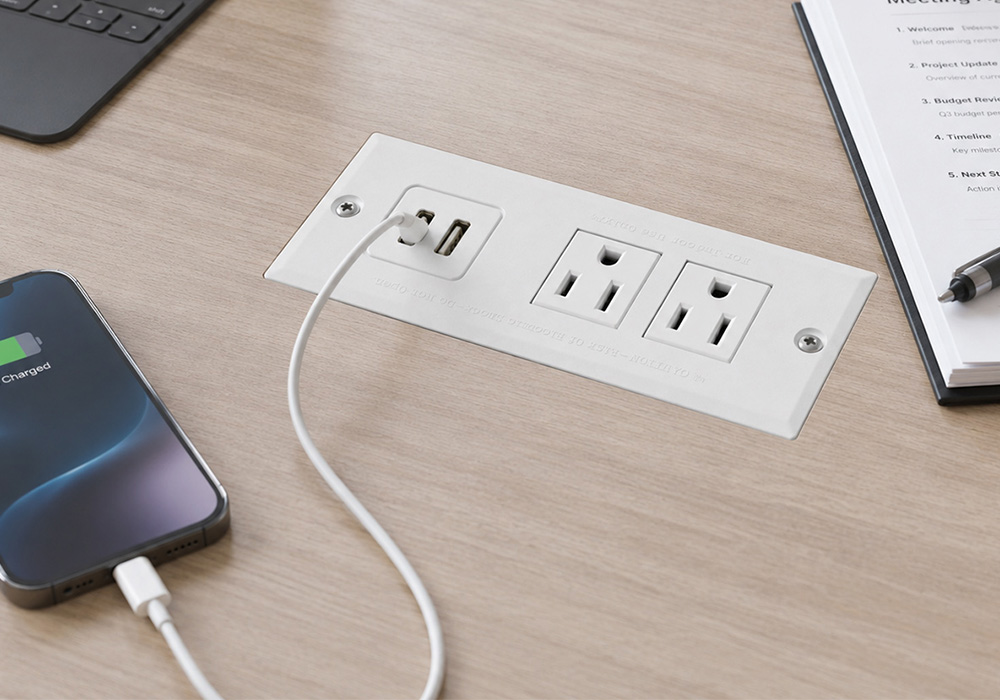
When expanding into the U.S. and Canadian markets, many cross-border brand owners and procurement professionals mistakenly assume that adapting a product for North America—referred to here as the “MJ22” standard—simply means swapping out the plug. This misconception is the root cause of many subsequent issues, including customs clearance rejections, product delistings from e-commerce platforms, equipment burnout, and warranty claims. The “MJ22” North American standard, developed by Shenzhen Fentesi Technology Co., Ltd., is a comprehensive power supply solution designed specifically for the North American market. It encompasses plug architecture, internal power circuitry, PCB power loops, cable selection, and safety compliance testing. Engineered for the 120V/60Hz North American power grid, it is suitable for a wide range of products, including solar energy storage systems, solar-powered televisions and fans, Bluetooth speakers, aroma diffusers, landscape lighting, automotive electronics, health and beauty devices, and various wiring harnesses. This article explores the MJ22 standard through four lenses—technical principles, application scenarios, selection checklists, and common procurement pitfalls—to help buyers make stable, compliant technical decisions.
To begin, it is essential to clarify the technical positioning of the MJ22 standard. The North American power grid operates at 120V/60Hz, which differs from the 220V/50Hz standard used in Europe and Asia in both voltage and frequency. Simply changing the plug is insufficient; it leads to mismatches in transformers, capacitors, and voltage-regulation circuits. This can result in excessive heat generation during prolonged operation or high ripple voltage. For precision health devices—such as pulse oximeters or sleep monitors—this can compromise the accuracy of data sampling; for high-power equipment, such as solar energy storage units or automotive lighting, it may cause protection mechanisms to fail. The Fentesi MJ22 solution is not a post-production plug modification; rather, it is integrated into the product development phase to align with North American electrical standards. The power circuitry’s voltage tolerance, insulation clearance, flame-retardant ratings, and grounding structures are all designed to meet CPSC (Consumer Product Safety Commission) safety regulations, FCC electromagnetic compatibility (EMC) requirements, and relevant UL standards for cabling. Furthermore, all associated components—including Type-C cables, DC power cords, and UV-resistant solar wiring harnesses—are fully compatible with the MJ22 specification, ensuring consistent parameters across the entire electrical chain.
The following are selection and adaptation recommendations categorized by product type—a critical aspect for procurement teams when evaluating compatibility:
- Solar Energy Storage (storage units, ultra-low-power solar TVs, solar fans): These products are frequently used in off-grid outdoor settings. In rural North America, RV environments, and residential yards, significant day-night temperature fluctuations are common, and some regions experience high humidity and frequent rainfall. When selecting the MJ22 series, prioritize cables with UV resistance and low-temperature tolerance. Ensure the input voltage regulation circuit is adapted for 120V wide-range voltage fluctuations to prevent charging irregularities caused by grid instability. The Fentesi (芬特思) MJ22 energy storage solution has undergone rigorous aging tests for both photovoltaic charging and AC grid-supplemented charging, making it well-suited for long-term outdoor use.
- Health and Beauty Devices (sleep monitors, pulse oximeters, shoulder massagers, facial cleansing devices, skincare infusion devices): These are low-voltage, precision-sensing devices that are highly sensitive to power supply ripple and electromagnetic interference (EMI). Many low-cost, “reconfigured” products—which are simply fitted with North American-style plugs—often exceed EMI limits, leading to data drift in pulse oximetry or sleep monitoring, and consequently, high customer return rates. The MJ22 solution incorporates filtering circuitry at the power input and undergoes pre-compliance testing for FCC radiated and conducted emissions, making it suitable for sale on Amazon, independent e-commerce sites, and through pharmacy retail channels.
- Automotive Electronics (interior/exterior vehicle lighting, push-to-start switches, automotive wiring harnesses): Automotive products must withstand battery voltage fluctuations and high inrush currents during engine start-stop cycles. The MJ22 automotive wiring harness series features enhanced surge protection and reinforced insulation. Furthermore, the terminal crimp strength and vibration resistance meet standard North American requirements for automotive accessories.
- Ambient Small Appliances and Cabling (Bluetooth speakers, aroma diffusers, wardrobe lights, lawn lights, Type-C data cables, and custom internal wiring): For low-power consumer electronics, key quality checks should focus on the flame retardancy of plugs, the mechanical lifespan of plug-in/plug-out cycles, and wire gauge specifications. The MJ22 cabling range includes both standard indoor versions and UV-resistant outdoor versions; for lawn lights and solar-powered garden fixtures, the UV-resistant wiring harness options should be prioritized.
A 7-Point Technical Verification Checklist for Procurement and Selection (to be checked upon receipt of samples and before placing bulk orders):
① Confirm the rated input specifications for the entire unit: AC 120V 60Hz. Avoid vague labels like “100–240V” if the internal circuitry is only designed for 220V.
② Verify that the plug and power cord meet UL standards for materials and that the wire gauge is appropriate for the rated power. For high-power energy storage units, do not use undersized wiring as a cost-cutting measure.
③ Request comprehensive FCC and CPSC test documentation for the entire unit. A certificate for the plug alone is insufficient; EMC and safety reports for the complete device are the primary focus for e-commerce platforms and customs authorities.
④ For products with built-in batteries, ensure the charge management IC is compatible with a 120V input and that protection logic—covering overcharging, overheating, and short circuits—is fully functional under 120V (MJ22) operating conditions.
⑤ For precision health/medical devices, require the supplier to provide a power supply ripple test report.
⑥ For products intended for outdoor use, confirm the IP (Ingress Protection) rating and resistance to UV-induced aging.
⑦ For custom wiring harness orders, verify terminal model specifications, crimping standards, and records of continuity and insulation testing.
Clarifying Common Procurement Misconceptions:
Misconception 1: A “wide-input-voltage” (universal) power board can simply be fitted with a North American-style plug for use in the 120V (MJ22) market. Many universal boards are only validated for 220V operation; when used with a 120V input, they suffer from low efficiency and excessive heat. While they may function in the short term, their long-term reliability is poor—this is the most common hidden risk. The Fentesi MJ22 solution is specifically engineered and stress-tested for 120V operating conditions, rather than being a generic wide-voltage board with a different plug.
Misconception 2: Having a UL certificate for the plug equates to full compliance for the entire unit. Platforms and customs authorities evaluate the complete device; a plug certificate alone is not enough to pass inspection—comprehensive test documentation for the entire unit is required.
Misconception 3: The North American market has low safety requirements for small home appliances. In recent years, the CPSC has seen an increasing number of product recalls involving energy storage power supplies and beauty/massage devices, with electrical fires and the risk of electric shock being key areas of regulatory scrutiny.
Based in Shenzhen, Fentesi Technology offers an integrated solution encompassing in-house R&D, SMT assembly, final product assembly, and testing. Our MJ22 series is available both as off-the-shelf products and through custom development. Clients can opt for existing models configured to the MJ22 specification, or request custom solutions such as DC wiring harnesses, UV-resistant solar-grade harnesses, and internal device wiring. Furthermore, our product design allows for future transitions to the European-standard MJE22 or British-standard MJB22 versions, helping to minimize the costs associated with additional tooling. During the early stages of a project, we provide schematic documentation, testing protocols, and aging data for samples—enabling your engineering team to conduct thorough internal evaluations and reducing risks during subsequent mass production.